Zone 2 is the most talked-about training intensity of the decade — and the most misunderstood. Podcasts sell it as a longevity hack, coaches build whole base phases on it, and yet most athletes doing "Zone 2" are riding or running slightly too hard to get its main benefit. The problem isn't effort or discipline. It's that they set the zone from a formula instead of from their own physiology.
This article explains what Zone 2 actually is, what it does to your body, why the popular ways of estimating it are unreliable, and how a blood lactate test sets your true Zone 2 ceiling with confidence.
What Zone 2 actually is
Zone 2 is the band of intensity that sits just below your first lactate threshold (LT1) — the aerobic threshold. It is the highest intensity at which your blood lactate stays essentially flat, barely above resting levels (typically around 1.5–2.0 mmol/L). Push past LT1 and lactate begins to climb; stay below it and you can hold the effort for hours while burning mostly fat.
In other words, Zone 2 is not a fixed heart rate or a percentage — it is defined by a physiological event that is different for every athlete. If you already know the difference between the two thresholds, skip ahead; if not, our guide to LT1 vs LT2 training zones lays out the full picture.
Why Zone 2 works: the physiology
Training at Zone 2 drives a specific set of adaptations that faster, harder sessions do not deliver as efficiently:
- Mitochondrial biogenesis — you build more and denser mitochondria, the cellular engines that turn fat and carbohydrate into usable energy. More mitochondria means a higher ceiling for everything above.
- Fat oxidation — Zone 2 trains your body to burn fat at higher outputs, sparing limited glycogen for when it matters. This is the metabolic flexibility endurance performance is built on.
- Capillary density — more capillaries around each muscle fibre improve oxygen delivery and lactate clearance.
- Low recovery cost — because it stays below LT1, Zone 2 adds aerobic volume without the fatigue of threshold or VO2max work, so you can do a lot of it week after week.
This is why elite endurance athletes spend roughly 80% of their training time at low intensity. The base is not filler between hard sessions — it is the adaptation that makes the hard sessions productive.
Why heart-rate and %FTP estimates get Zone 2 wrong
Almost every athlete sets Zone 2 one of three ways, and all three are approximations that can miss by a wide margin.
The "180 minus age" and %HRmax formulas
Population averages hide enormous individual variation. Two 40-year-olds can have maximum heart rates 20+ bpm apart, and LT1 can fall anywhere from 65% to 80% of max HR depending on training status. A formula that is right on average is wrong for most individuals — and even a 5-bpm error is enough to push you from true aerobic training into the "grey zone."
Percentages of FTP or threshold pace
Setting Zone 2 as, say, 56–75% of FTP assumes a fixed relationship between your aerobic and anaerobic thresholds. That ratio is not fixed — it shifts as you train, and it differs between a fatigue-resistant diesel and a punchy anaerobic rider. Anchoring Zone 2 to LT2/FTP inherits every error in your FTP estimate and adds a modelling assumption on top. (We cover the FTP relationship in depth in FTP vs LT2.)
Feel and the talk test
"Conversational pace" and nose-breathing are useful field cues, and they are better than a bad formula. But they are coarse — most people can hold a conversation slightly above LT1, which is exactly the error that turns Zone 2 into a moderately-hard session that no longer delivers the aerobic payoff.
The grey zone: the most common Zone 2 mistake
The single most frequent error is riding or running a little too hard — drifting a few percent above LT1 into what coaches call the grey zone. It feels productive because it's harder, but it is metabolically the worst of both worlds: too hard to be true low-intensity base work, too easy to be a real threshold stimulus. You accumulate fatigue without the specific adaptation you came for. Setting the ceiling correctly is what keeps you out of it.
How a lactate test finds your true Zone 2
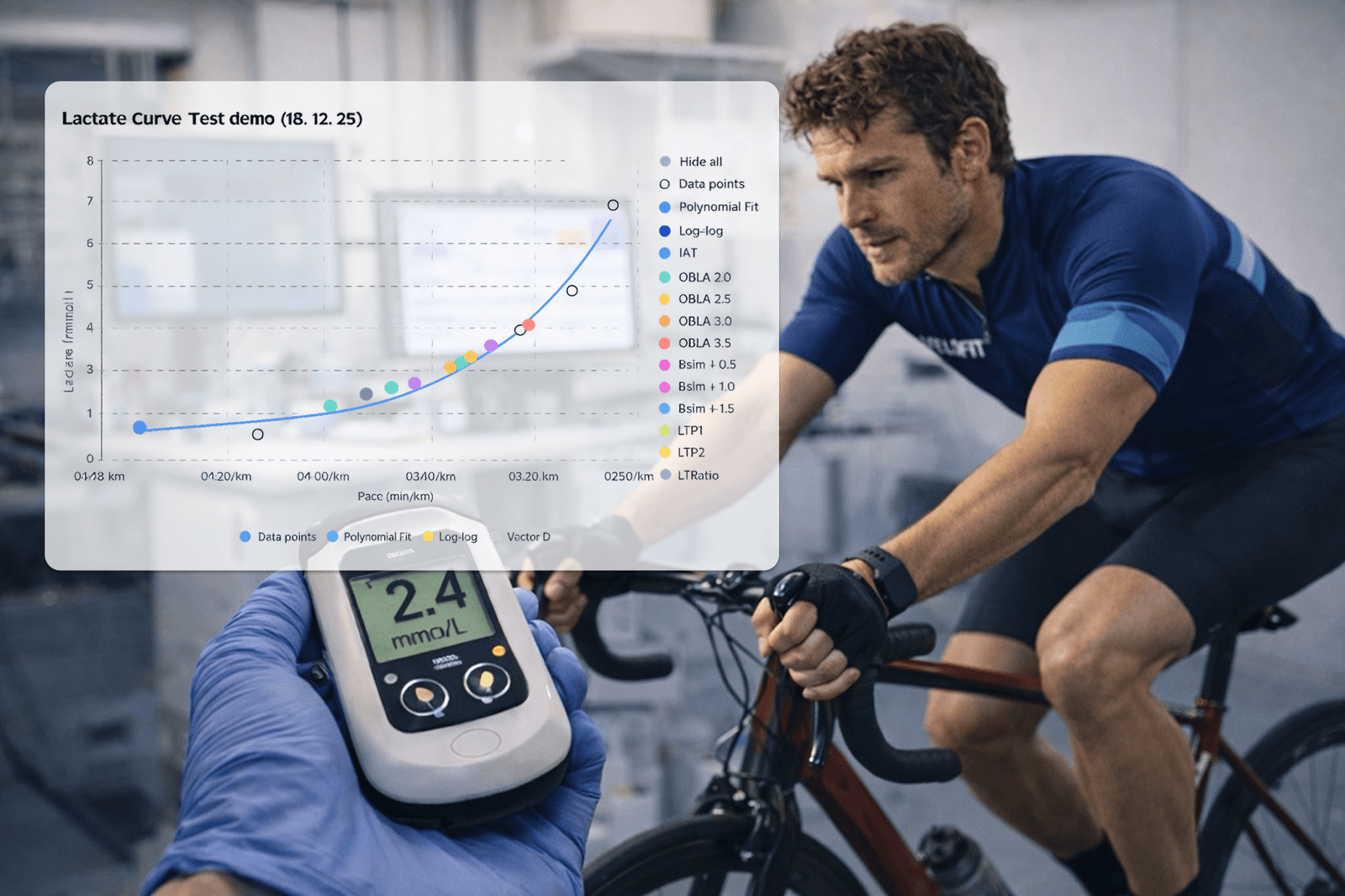
A blood lactate step test is the most direct way to locate LT1, and therefore the top of Zone 2. The logic is simple: measure lactate at a series of increasing intensities, find the point where it first rises meaningfully above baseline, and set your Zone 2 ceiling just below it.
- Run a step test. Warm up, then ride or run a series of 3–5 minute stages of increasing intensity, taking a fingertip lactate sample at the end of each. Our testing protocol guide walks through stage length, sampling and the common errors — and you can do the whole thing at home with a portable analyzer (see the at-home guide).
- Find LT1. LT1 is the first sustained rise above your resting/baseline lactate — often around 1.5–2.0 mmol/L, but the exact value is individual. This is where Zone 2 ends.
- Set the band. Your Zone 2 is the range from easy endurance up to the power or pace at LT1. Train at the top of that band to maximise the aerobic stimulus without crossing over.
- Re-test as you improve. As your aerobic base grows, LT1 moves to a higher power or faster pace. Zone 2 is a moving target — a test every 8–12 weeks keeps it honest.
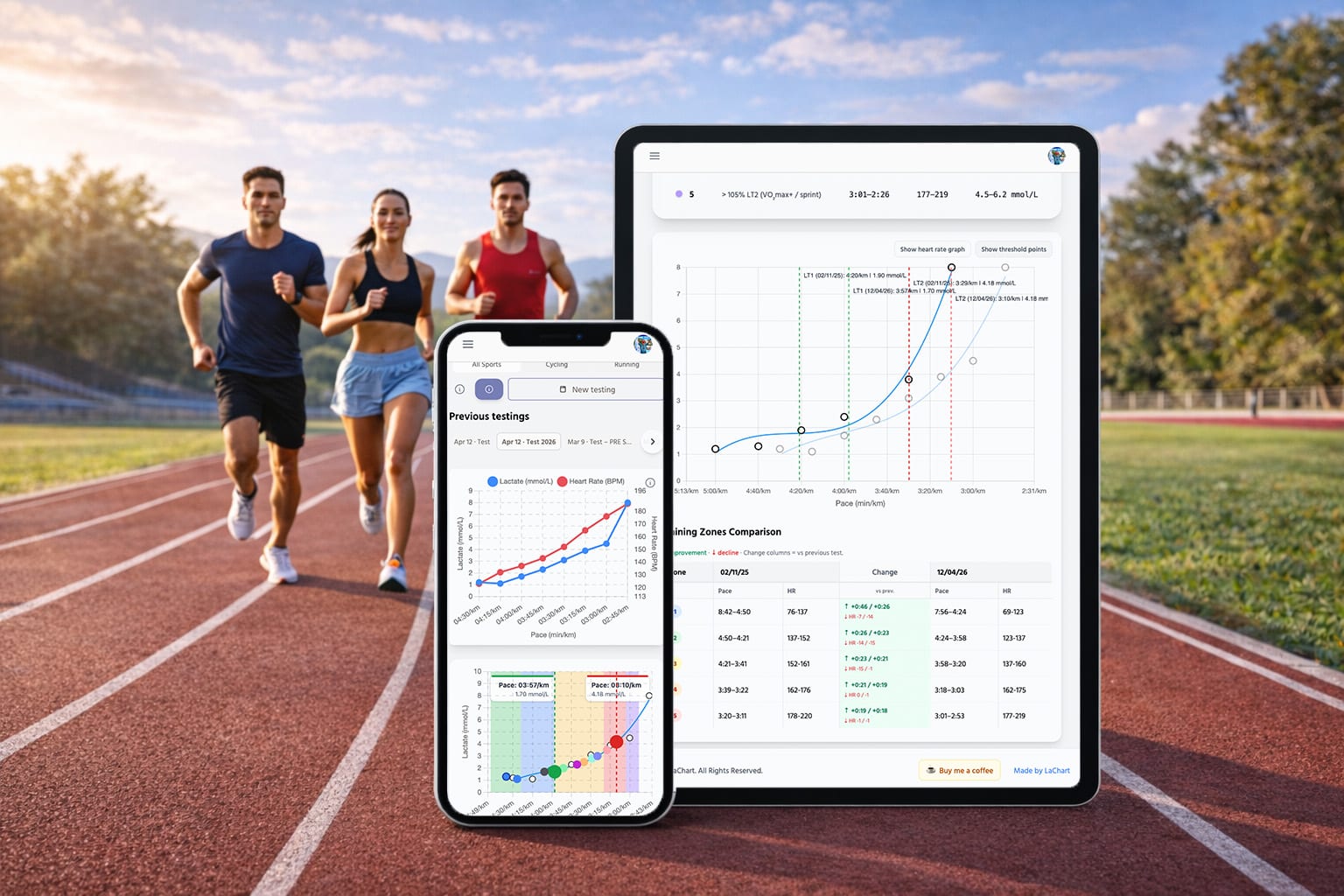
This is exactly what LaChart automates: enter your step-test numbers and it detects LT1 and LT2 using several methods at once, then builds your full power, heart-rate and pace zones around them — no manual curve-drawing, no guessing which formula to trust.
How much Zone 2, and how to do it
- Volume: aim for the majority of your weekly hours in Zone 2. For most age-group athletes that means the bulk of endurance rides and easy runs sit here.
- Duration: sessions of 45–90+ minutes let you spend real time in the fat-oxidation window. Very short Zone 2 sessions give less return.
- Discipline: hold the top of the band, but the moment terrain, heat or fatigue pushes lactate up, ease off. On climbs this often means going frustratingly easy — that is correct.
- Cardiac drift: over a long Zone 2 session heart rate creeps up at the same power. Anchor to power or pace (set from LT1), not heart rate alone, so drift doesn't nudge you into the grey zone.
The bottom line
Zone 2 works — but only if you actually train in it. The intensity is defined by your first lactate threshold, and no age formula or FTP percentage can locate that reliably for you as an individual. A single lactate step test replaces all the guesswork with a number you can train against, and re-testing keeps it current as you get fitter. Set the ceiling right, hold it with discipline, and the aerobic base takes care of the rest.