Blood Lactate Testing Guide
Everything you need to understand LT1, LT2, threshold detection methods, and how to turn your test results into smarter training zones.
Featured Guides
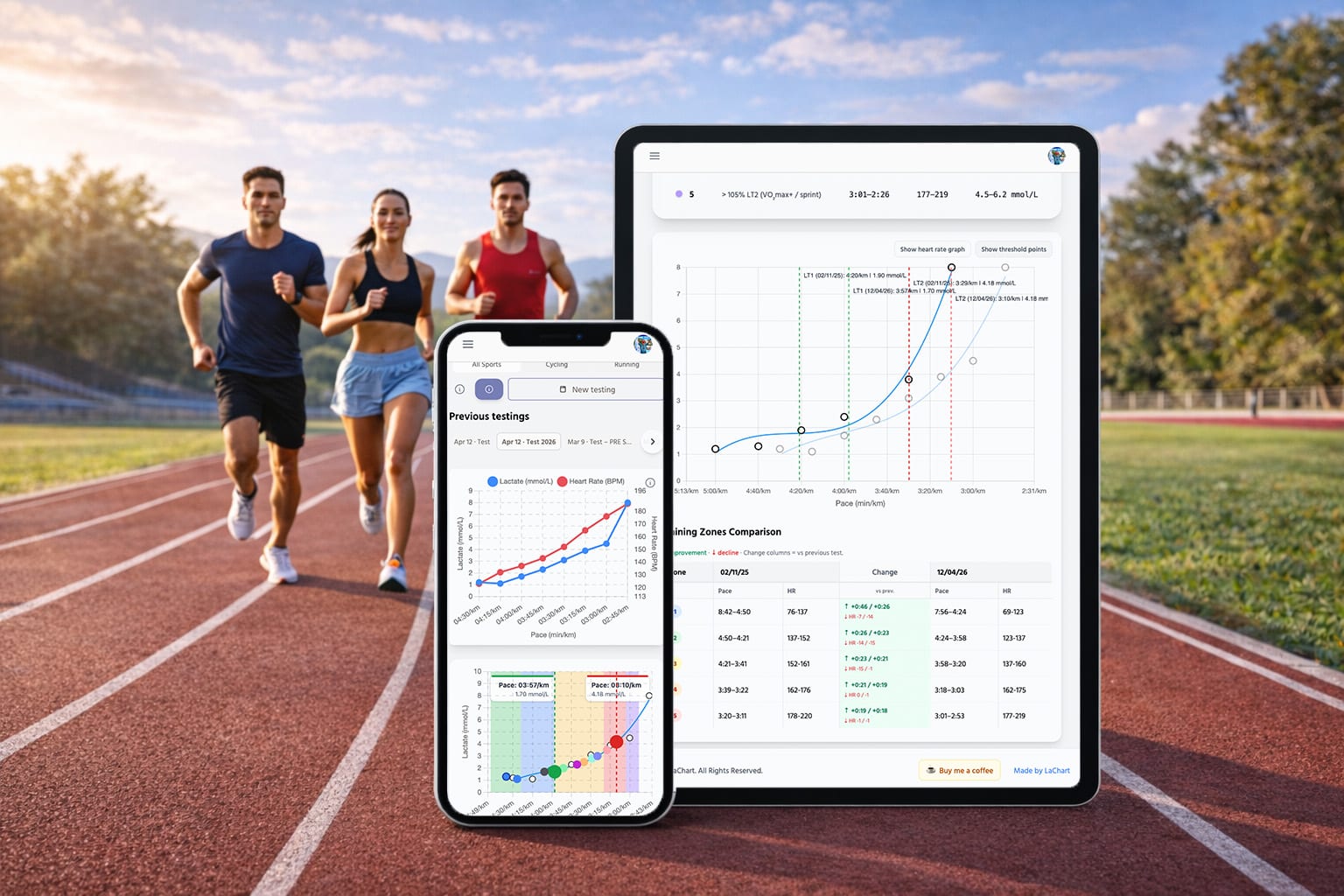
The Best TrainingPeaks Alternatives in 2026 (Honest Roundup)
Garmin now owns TrainingPeaks, and plenty of athletes and coaches are weighing their options. The alternatives actually worth considering in 2026 — intervals.icu, WKO5, TrainerRoad, Coachbox, LaChart and more — what each is best at and where it falls short.
Critical Power vs FTP vs LTHR: Which Threshold Number Should You Train By?
Three numbers claim to define your endurance ceiling — Critical Power, FTP and lactate threshold heart rate. They sit close together but they are not the same, and using the wrong one quietly mis-sets every zone below it. Here is what each measures and which to trust.

VLaMax Explained: What Your Maximal Glycolytic Rate Means for Endurance
VO2max gets the attention, but the number that often decides your threshold is VLaMax — your maximal rate of lactate production. What it is, why it moves your LT2, and how to train it in the right direction.
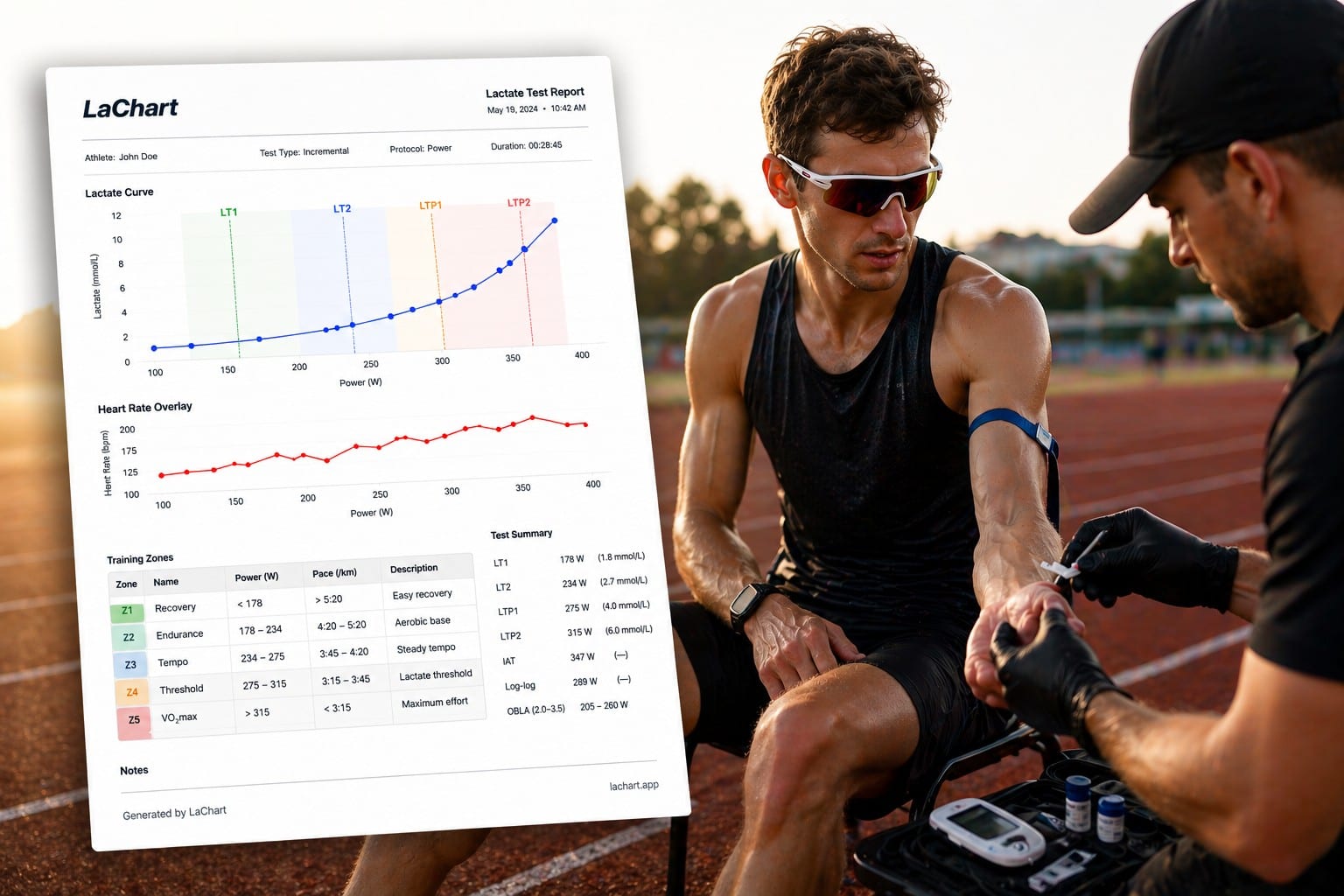
Lactate Testing Software for Coaches: What to Look For (and Why Spreadsheets Cost You)
If you test lactate for clients, the analyzer is only half the job. Branded reports, per-athlete history and training planning are where the right software pays for itself — here's the buying checklist.
Lactate Threshold Heart Rate (LTHR): How to Find Yours and Train By It
Your LTHR is the most useful heart-rate number in endurance training — and almost nobody's is what the %-of-max formulas say. What it is, the three ways to measure it, and how to build your HR zones around it.
Zone 2 Training Explained: How to Find Your True Zone 2 with a Lactate Test
Everyone talks about Zone 2, almost nobody knows where theirs actually sits. Heart-rate formulas and %FTP put most athletes in the wrong band — here is what Zone 2 really is, why it works, and how a lactate test pins it down to the watt.
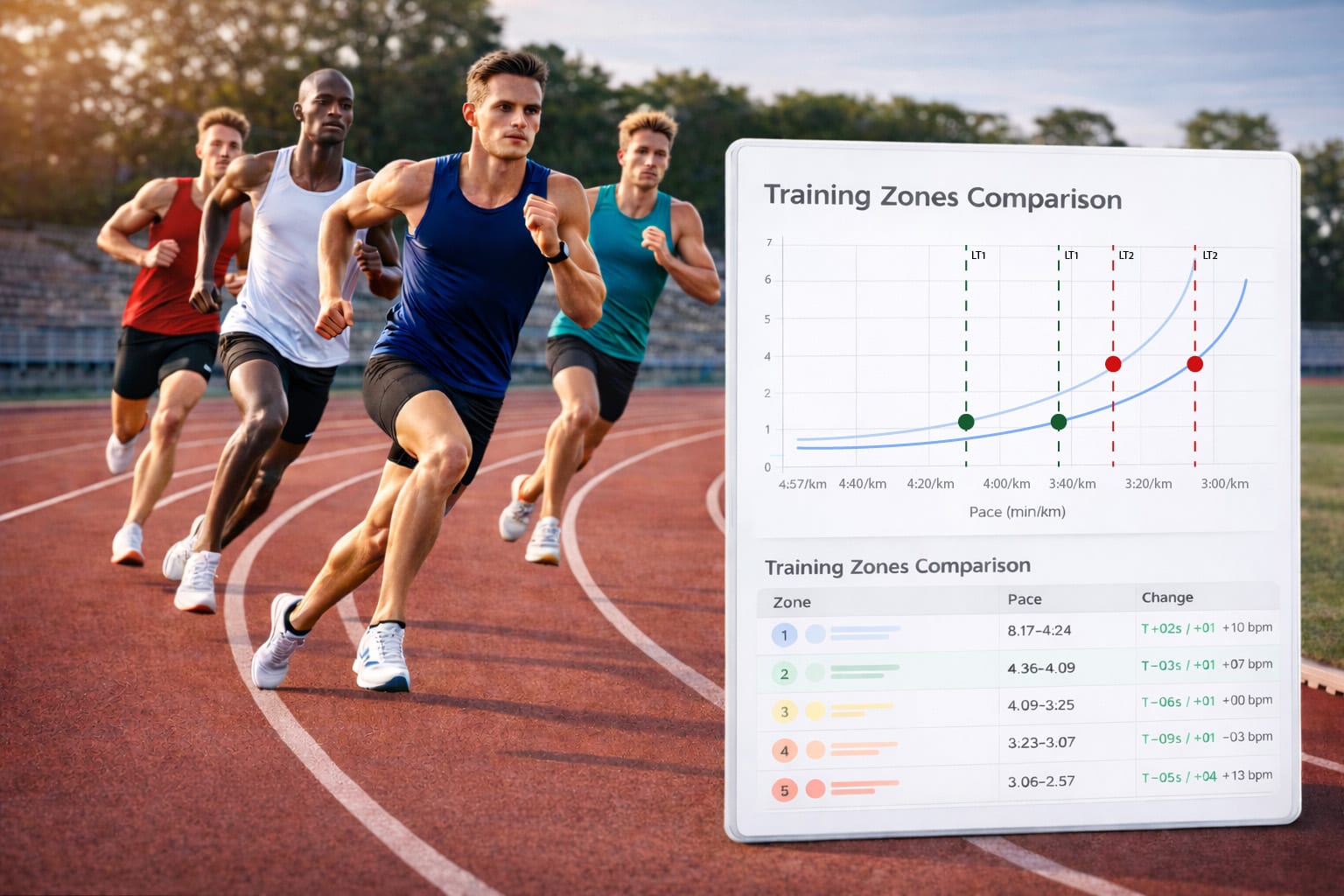
How LaChart Calculates LT1 and LT2: The Science Behind the Algorithm
An in-depth look at the 8 threshold detection methods LaChart uses — from D-max and OBLA to log-log transformation — and how they are combined to produce accurate, reproducible lactate thresholds.
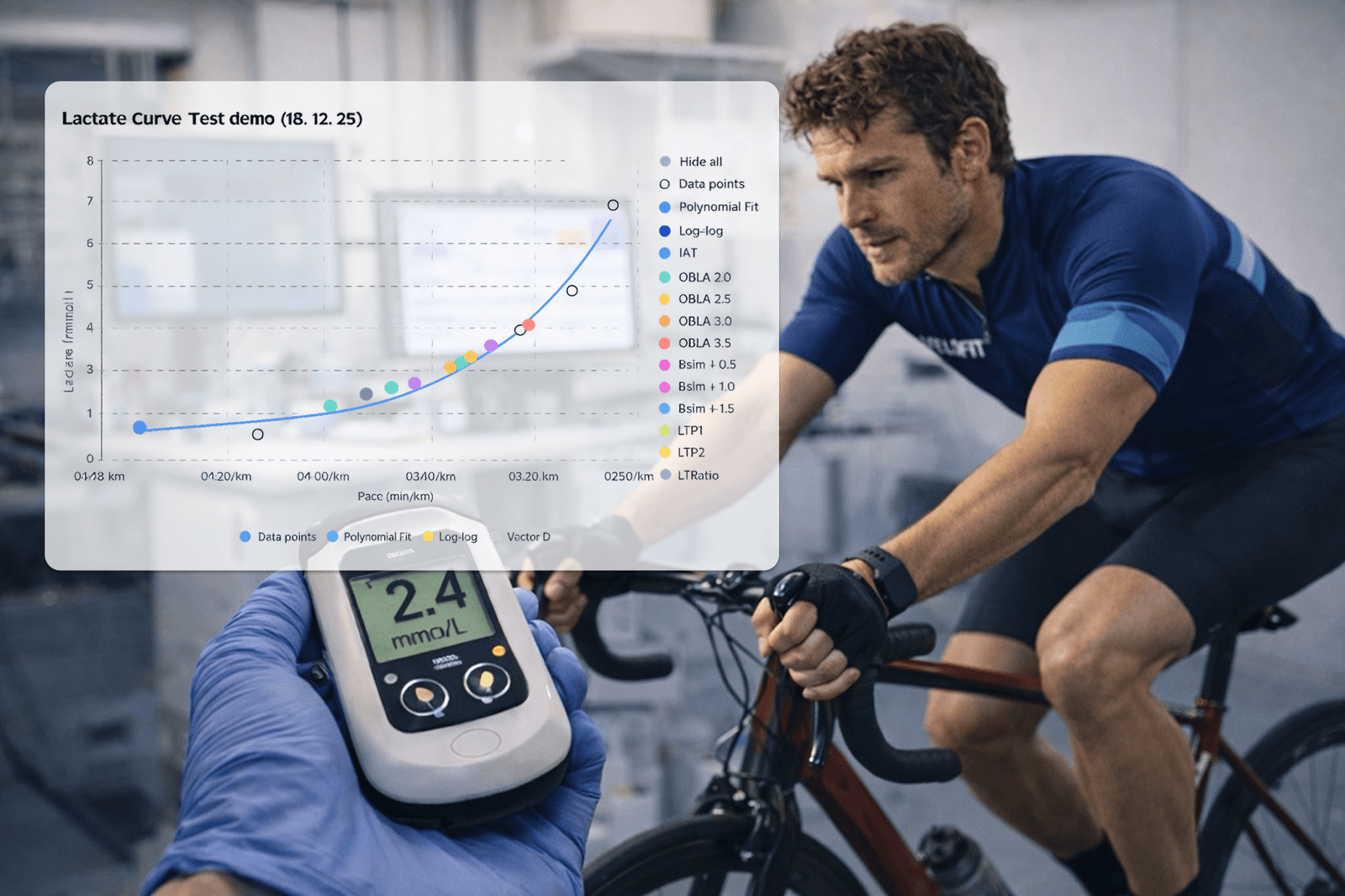
The Complete Blood Lactate Testing Protocol: Step-by-Step Guide for Athletes and Coaches
Everything you need to know to run a valid lactate threshold test — warm-up duration, step length, sampling technique, and how to avoid the most common errors that corrupt your data.
How to Do a Lactate Threshold Test at Home: A No-Lab Guide for Cyclists and Runners
A practical, equipment-only-needed guide to running your first blood-lactate test at home — what analyzer to buy, how to set up the step protocol, where to prick, and how to avoid the four most common rookie mistakes.
Reading Your Lactate Test Step by Step: From Raw Numbers to Training Zones
Got a lactate test result on your screen but no clue what it means? Here is a stage-by-stage walkthrough — how to spot the LT1 inflection, the LT2 deflection, the curve shape clues, and the red flags that mean re-test.
Best Lactate Analyzer 2026: Lactate Pro 2 vs Lactate Plus vs Lactate Scout — Tested
Three portable analyzers dominate home and lab lactate testing in 2026. We put Lactate Pro 2, Lactate Plus, and Lactate Scout 4 through accuracy, strip-cost, ease-of-use and Bluetooth checks — and tell you which one to actually buy.
More Articles
LT1 vs LT2: What They Mean for Your Training Zones
Most athletes confuse LT1 (aerobic threshold) with LT2 (anaerobic threshold). This article explains the physiological difference, why both matter, and how they translate into practical training zones for cycling, running, and triathlon.
OBLA, D-max, IAT, Log-Log: Which Lactate Threshold Method is Most Accurate?
A practical comparison of the four most widely used lactate threshold detection methods, their scientific background, and why no single method is perfect — which is why LaChart uses all of them together.
FTP vs LT2: Are They the Same Power? Spoiler — Usually Yes, Sometimes No
FTP is everywhere in cycling, LT2 is the gold standard in physiology. They sit next to each other on the curve but they are not identical — here is exactly how much they differ, when they line up, and which one you should actually train against.
LT1 & LT2 at a Glance
- ›First point where lactate rises above baseline
- ›Typical range: 1.5–2.2 mmol/L (cycling)
- ›Upper boundary of Zone 2
- ›Fat metabolism still dominant
- ›80% of elite training volume stays below LT1
- ›Lactate accumulation accelerates sharply
- ›Typical range: 3.5–4.2 mmol/L
- ›Equivalent to FTP in cycling
- ›Maximal Lactate Steady State (MLSS)
- ›Sustainable for 45–75 minutes
Threshold Detection Methods
Fixed lactate values (2.0–4.0 mmol/L). Simple and reproducible; best for cross-athlete comparisons.
Finds the point of maximum curvature on the lactate curve. Individualised — no fixed lactate assumption.
Step with the steepest lactate rise per unit power. Captures the kinetic onset of accumulation.
Logarithmic scale reveals the aerobic threshold breakpoint. Best for LT1 in trained athletes.
Ready to analyse your own test?
Enter your blood lactate step-test data and get LT1, LT2, training zones, and a PDF report — free, no account needed to try.